Understanding Water Flow: The First Step to Better Yard Drainage
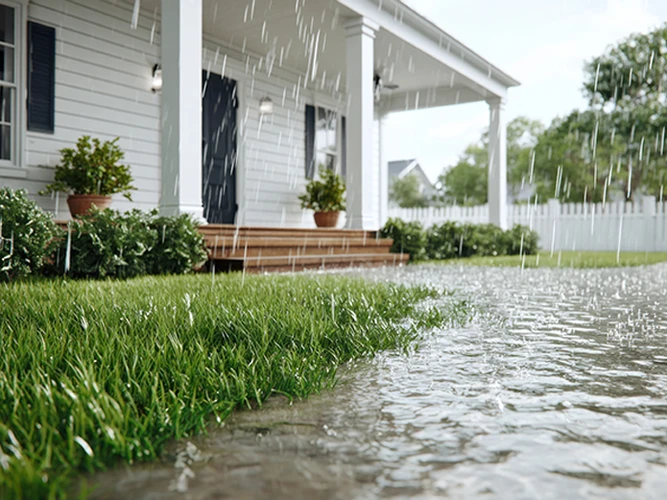
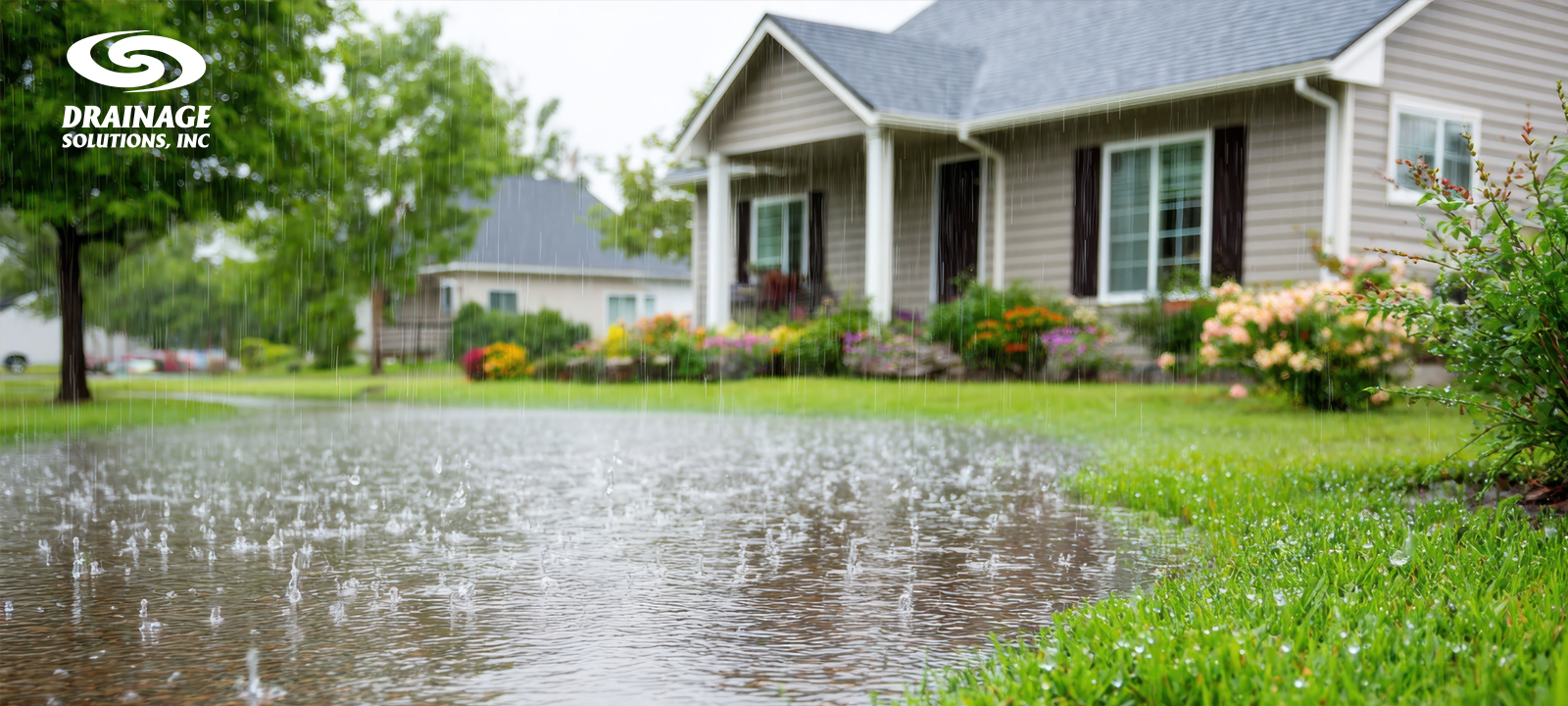
If you're searching for yard drainage solutions, it's tempting to start by shopping for drainage products. But the best drainage solution begins with understanding how water moves across your property. Standing water in the lawn, soggy planting beds or water pooling near the foundation can all look similar — but the cause (and the fix) can be very different.
The most common mistake in tackling a wet yard or water pooling near a foundation is running to the home improvement store for French drain kits or catch basins before assessing the landscape. Before choosing a yard drainage system, it is essential to first identify the source of the water.
Because every property features a unique combination of soil type, grading, roof runoff and high-water tables, there is no one-size-fits-all fix. Skipping the diagnostic phase and selecting the wrong drainage solution usually guarantees failure, leading to ongoing water issues, thousands in unnecessary costs and the frustrating cycle of repeat repairs.
Drainage Solutions Inc. is your trusted partner in helping you get to the root cause of your drainage issues, including assessing where water is coming from, where it is going and how those observations help determine the right drainage approach. Once those issues are diagnosed, our team of experts can help you select the correct drainage solution for your unique needs.
Every Property Handles Water Differently
No two properties are created equal, which is why a drainage strategy that works brilliantly for your neighbor might fail on your own lot. How a specific property handles water is determined by a complex, interconnected mix of environmental and structural factors:
- Existing grading and property elevation dictate the natural direction and speed of runoff.
- Soil composition — whether it is fast-draining sand or dense, water-retaining clay — governs how much moisture the earth can actually absorb.
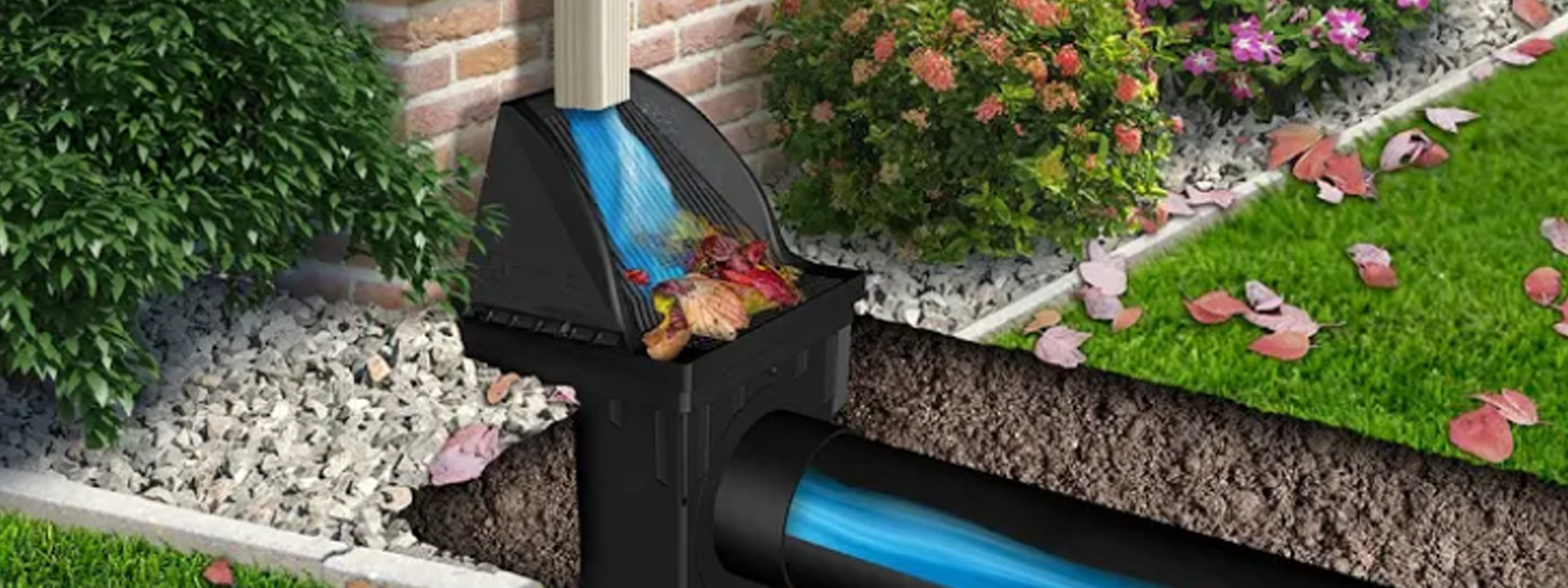
- Roof runoff funnels massive volumes of concentrated water down spouts.
- Hardscape surfaces like patios and driveways completely eliminate natural absorption, forcing water to find new paths.
Furthermore, landscaping choices can either act as a sponge or accidentally block vital drainage paths. Finally, you cannot view a lot in a vacuum; neighboring properties often shed their own excess runoff onto your land or block your property’s natural exit routes. Because these variables combine in infinite ways, custom diagnosis is non-negotiable — a one-size-fits-all property draining planning solution cannot account for the unique physics of your specific landscape.
Start by Following the Water
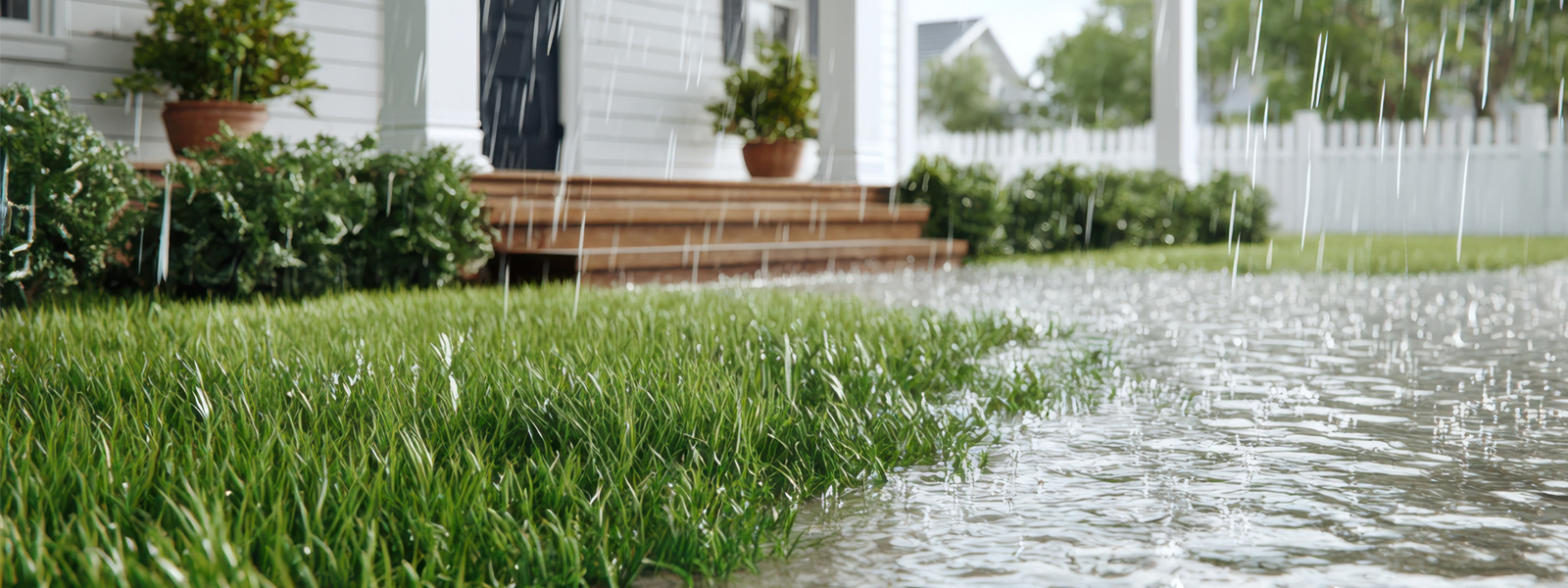
Evaluating your property’s unique drainage footprint is best done with a firsthand look, ideally by observing your yard during or immediately after a heavy rainfall. Start by mapping out the physical layout of the water's movement: identify the natural high and low points of the terrain and look for obvious trouble spots like standing water or areas where mulch completely washes away.
Pay close attention to structural transitions and note downspout discharge zones, water flowing across patios or driveways, and any signs of erosion along walkways. Most critically, look for water collecting or pooling near foundations, which poses the greatest risk to your home. By watching how gravity and these surfaces interact in real time, you can pinpoint exactly where the natural flow breaks down before spending a dime on your yard drainage solution.
Matching Your Drainage Problem to the Right Solution
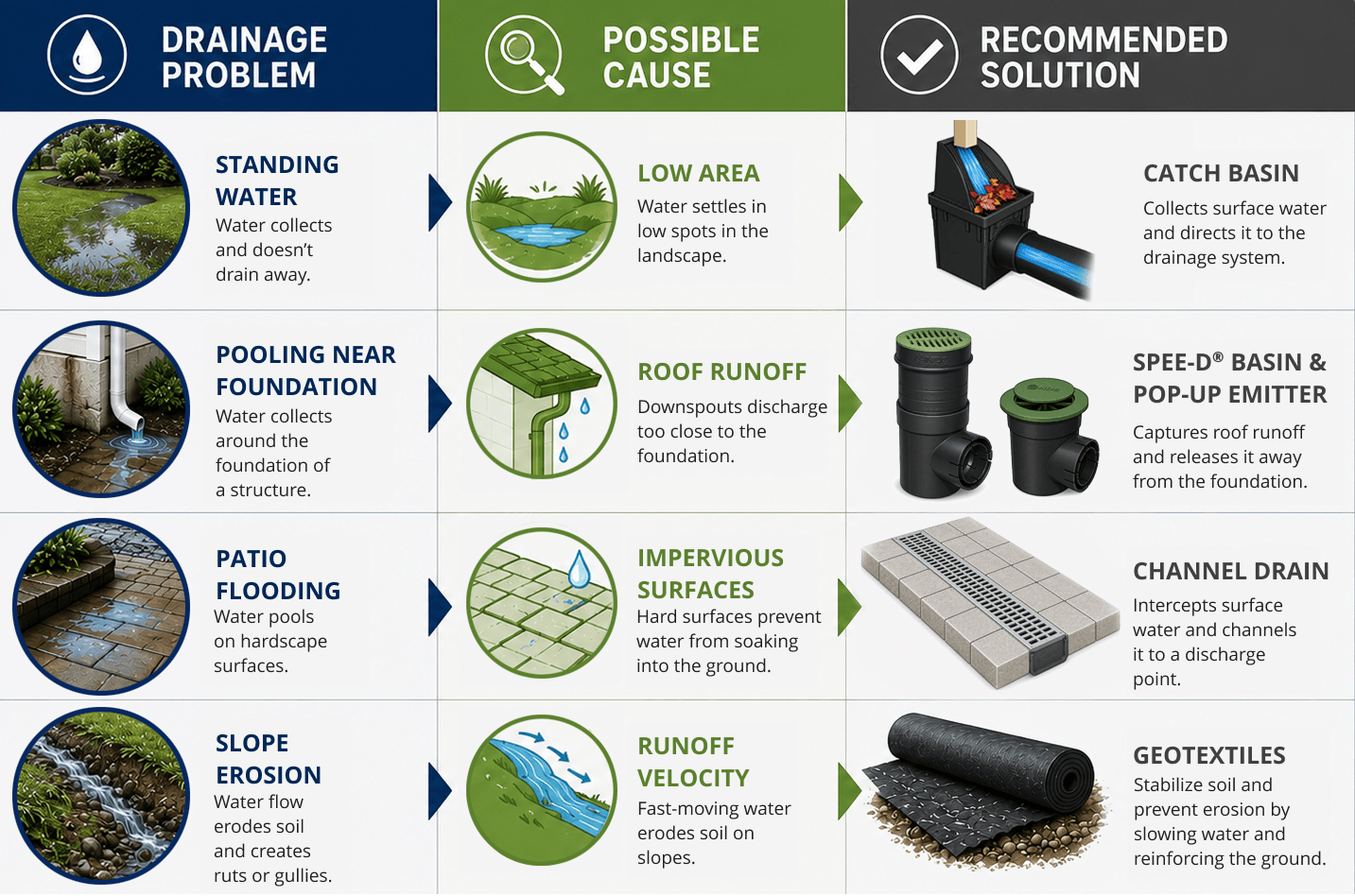
To fix your yard’s water issues for good, you have to find the source of the runoff and map its behavior. Until then, using the incorrect solution — like installing a surface drain for subsurface mud — wastes both time and money.
Below are a few common drainage issues and some proposed solutions to help solve them:
Problem: Water collects in one low area of the yard.
Possible solutions: Water should be captured by grates, catch basins, channel drains, Flo-Well, downspouts and roof gutter systems to flow through the drainage pipe and away from structural foundations to safe or useful areas. For example, water can be routed from a low area next to a foundation to a water-safe area such as a curbside drainage system. The NDS Pop-Up Emitter with Elbow & Corrugated adapter allows water to be diverted and released to water-safe areas away from structures, erosion-prone landscapes and poor drainage areas.
Problem: Water flows across patios, driveways or pool decks.
Possible solutions: Channel drains are used to drain sheet-flow runoff from hardscapes such as driveways, patios, pool areas, courtyards and walkways. Products like the Stegmeier Deck Drains are designed to collect water from surrounding surfaces and direct it away to the drain pipe. This product is an extruded PVC drain that comes with connecting couplers and is designed to be set level.
Problem: Decorative outdoor spaces require drainage without sacrificing appearance.
Possible solutions: Decorative trench grates like those from Iron Age Designs can help solve this problem by blending high-capacity surface drainage with custom aesthetics. Instead of hiding utilitarian plastic covers, you can integrate architectural metal designs that complement your hardscaping.
Common Drainage Planning Mistakes
Designing a drainage system without a clear plan often leads to some costly mistakes. The most frequent missteps include choosing products before truly identifying the root problem, completely ignoring the massive volume of roof runoff or, worst of all, installing drainage piping that has absolutely nowhere to discharge.
Homeowners also frequently trip up by underestimating the size of their drainage systems, overlooking the future need for maintenance access cleanouts and assuming that all standing water requires the exact same solution. At Drainage Solutions Inc., we see these pitfalls all the time, and we position ourselves as your knowledgeable resource to help you navigate the planning phase. We ensure you choose the right strategy the first time, protecting your property and saving you from the headache of expensive, repeated repairs.
Drainage Solutions Inc. carries many additional, high-quality solutions that prevent water contamination. Find the drainage equipment and tools you need on our online store. Together with our customers, we can continue to improve the quality of our waterways for future generations.
In Conclusion
Ultimately, a dry, stable property doesn't come from a specific box at the store — it comes from a clear strategy. The most successful, long-lasting drainage system designs starts with understanding how water moves across your unique landscape.
Drainage Solutions Inc. can help you evaluate your drainage issue and help you select the right products engineered for your specific challenges, rather than relying on guesswork. Shop online now at drainageproducts.us or, if you live locally, stop by one of our four Indiana locations for high-quality products and helpful advice.