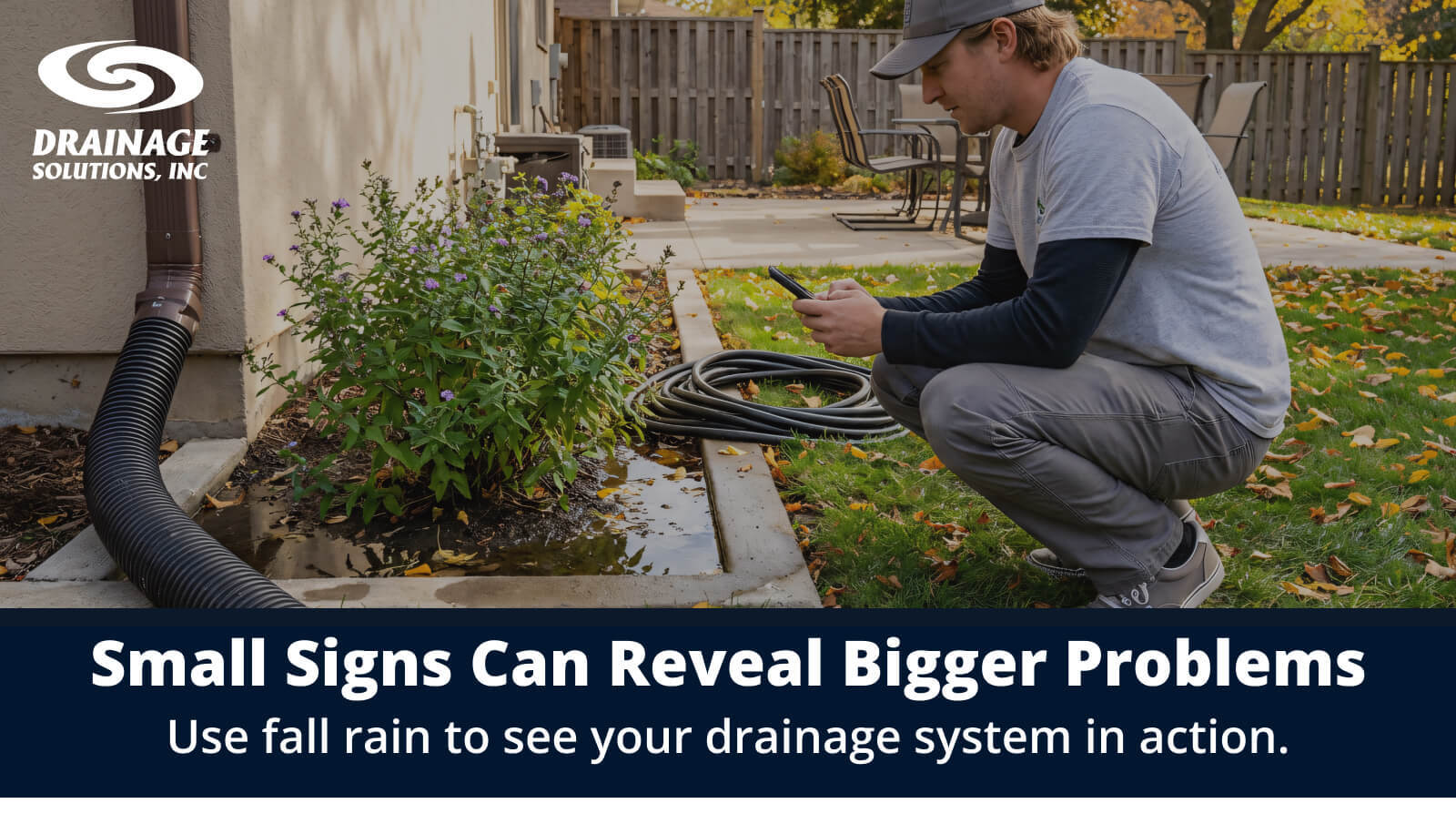
What Fall Rain Can Tell You About Your Drainage System
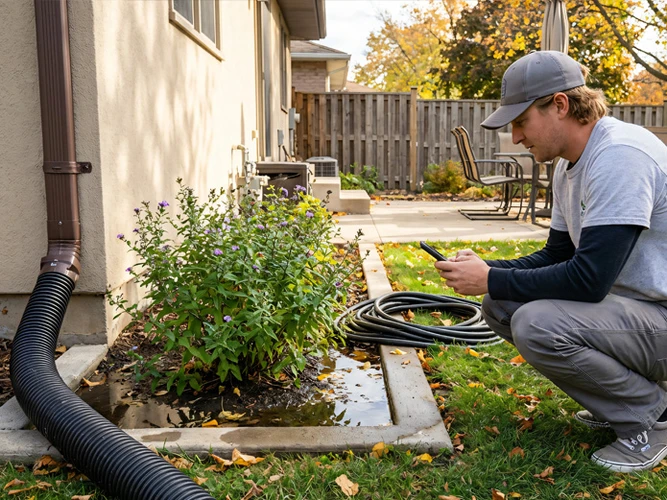
A steady fall rain can reveal signs of drainage problems that a dry-day inspection cannot: it gives you the chance to see a drainage system working in real time. Water that misses a drain, backs up at an inlet or remains hours after the rain stops may point to a maintenance issue or a larger drainage problem.
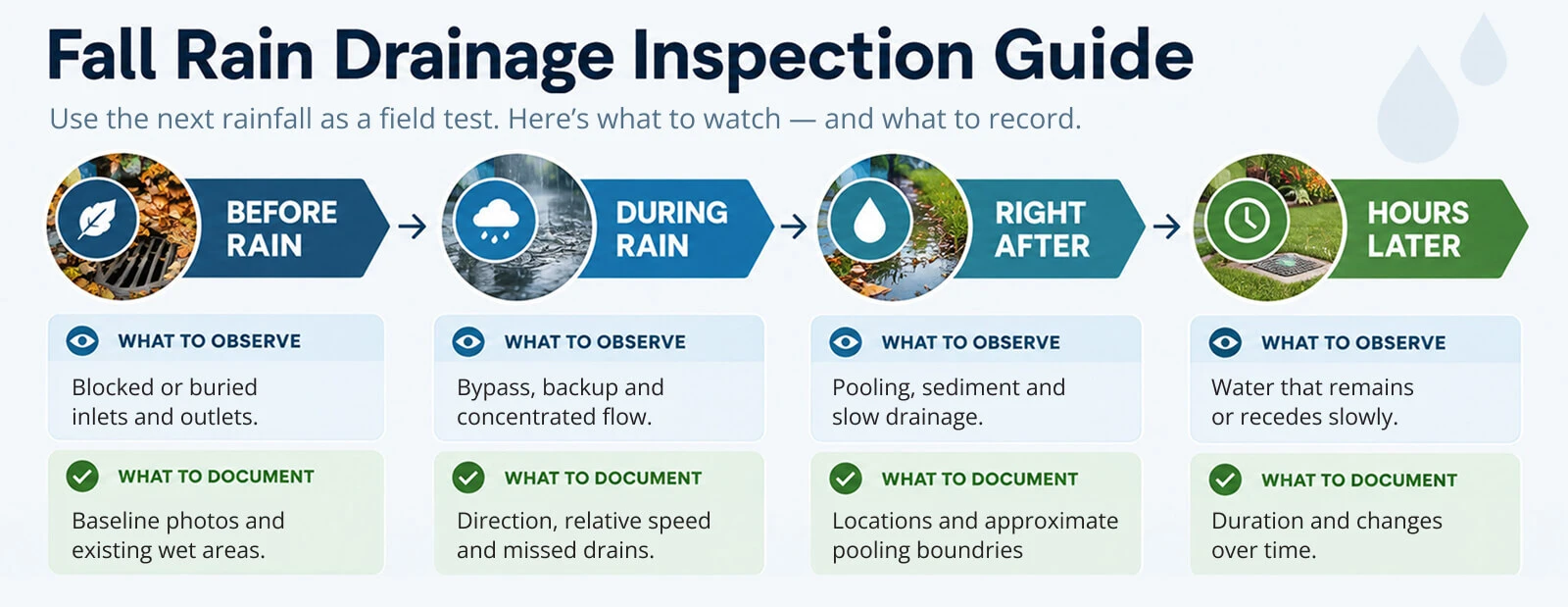
Use the next rain as a simple field test. Observe the property before, during and after the storm, but only when conditions are safe. If you are still planning a new system, begin with our guide to how to plan yard drainage. This article focuses on evaluating how an existing property or drainage system performs.
Before the Rain Starts
A quick walk before the rain creates a useful baseline. You will know what was already blocked, buried or damaged before water begins moving through the system.
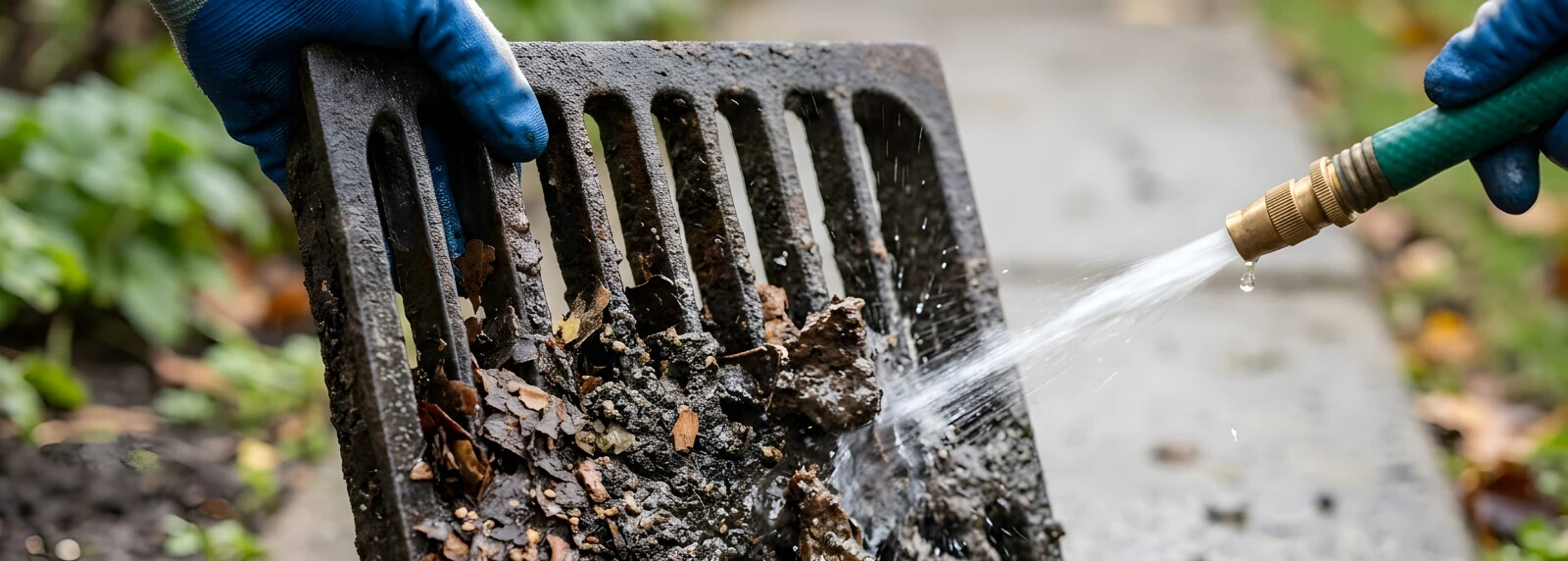
- Clear visible debris: Remove accessible leaves, grass and loose material from drain grates, catch basins and outlets. Do not reach into buried pipe or attempt repairs during unsafe conditions.
- Locate every inlet and outlet: Identify downspouts, grates, catch basins, channel drains, pipe ends and pop-up emitters. Make sure outlets are not buried under turf, soil or leaves.
- Note existing wet areas: Mark places that are already soft or saturated. This will help you distinguish a recurring issue from a new problem caused by the rain.
- Prepare to document: Keep your phone ready for photos and short videos. Landscape flags or temporary markers can help identify pooling boundaries after the storm.
During the Rain
Observe from a safe location during a steady, light-to-moderate rain. Never inspect during lightning, severe weather, flash flooding or fast-moving water.
Watch the Downspouts
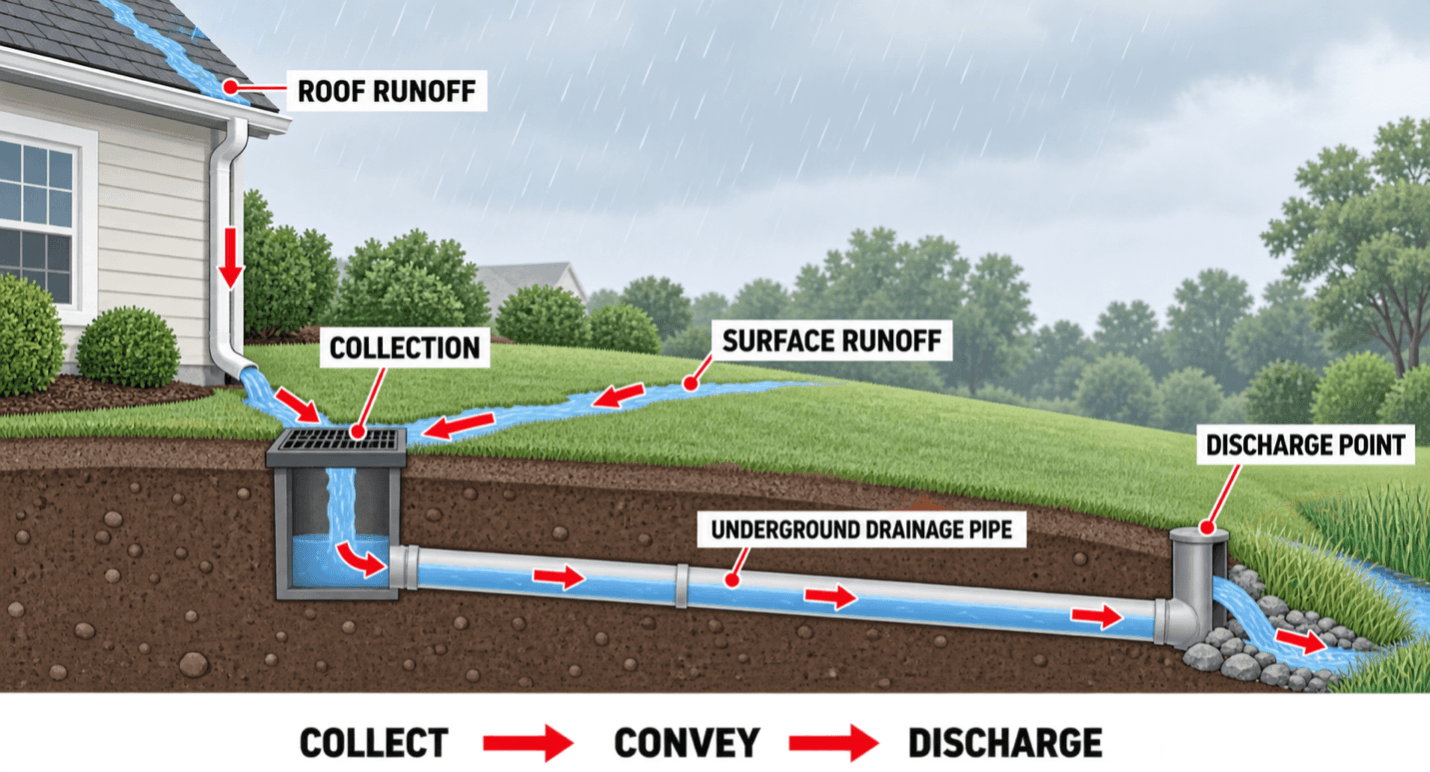
Check where roof runoff reaches the ground. Is the connection secure? Does water enter the drainage line, or spill beside the foundation? A downspout may also discharge faster than a nearby basin can collect the water.
Watch the Inlets
Look at catch basins, grates and channel drains while water is moving. Runoff should reach and enter the inlet. Water flowing around or past a drain may indicate debris, poor placement or limited capacity.
Watch for Backup
Slow drainage, bubbling or water rising from an inlet may indicate that an inlet, pipe or outlet is restricted, damaged or unable to handle the incoming flow. Do not assume the inlet itself is the only problem; the restriction may be farther through the system.
Watch the Outlet
Confirm that water reaches the system’s discharge point. A blocked pipe end or buried pop-up emitter can prevent the entire system from releasing water effectively.
Immediately After the Rain
Once the rain stops, walk the property again. Conditions visible now may disappear as the ground dries.
- Look for recurring puddles: Note water near foundations, in low lawn areas and along patios or walkways.
- Check what the water left behind: Soil, mulch, gravel or sediment on a hard surface can reveal the direction of concentrated runoff.
- Inspect drains again: Look for debris that moved onto a grate during the storm. Note any inlet that is still draining slowly or holding water.
- Check the discharge area: Confirm that water can leave the outlet without flowing back toward the property or creating a new erosion problem.
Check Again Several Hours Later
A second inspection helps separate temporary wetness from a recurring drainage concern. Compare problem areas with the rest of the property.
- What drained normally? Areas that clear at a similar rate to the surrounding property may simply reflect the amount of rain received.
- What remains saturated? Puddles or soggy turf that stay noticeably wetter than nearby areas may deserve further evaluation.
- Did the pooling area shrink? Use photos or markers to track whether water is receding and how the boundary changes.
- Is the system still holding water? Standing water at an inlet or outlet may indicate a restriction, poor outlet location or limited system capacity.
Document What the Rain Revealed
Good documentation can make a conversation with a contractor or DSI product specialist more productive. Record the date, approximate rain intensity and how long water remained after the storm.
Take wide photos that show the location in relation to the building, then add close-up photos of the inlet, outlet or damaged area. Short videos can show where water comes from, which direction it travels and whether it enters or bypasses a drain.
This information is useful, but it does not replace system measurements or a site evaluation. Pipe size, grading, soil conditions and the available outlet may still need to be assessed before products are selected.
Maintenance Issue or Larger Drainage Problem?
Some performance problems begin with routine maintenance. An accessible grate covered with leaves or a pop-up emitter buried under turf may only need to be cleared. Other conditions point to a larger issue.
Consider additional evaluation when water repeatedly bypasses a drain, backs up through an inlet, remains in the same area after multiple rains or discharges where it creates another problem. Those conditions may involve placement, capacity, grading, pipe condition or the outlet — not just the visible product at the surface.
In colder climates, identifying recurring pooling before winter can also help property owners and contractors document trouble spots before snow or frozen ground makes them harder to evaluate.
Find the Right Next Step
Ready to address what the rain revealed? DSI carries products for maintaining, repairing and completing drainage systems, from collection and conveyance components to drainage pipe and discharge solutions.
Call one of our drainage product experts for help identifying product options based on what you observed. Shop DSI online or visit one of our Indiana locations in Franklin, Lebanon, Greenfield or Leesburg.